
Potentiality Explored No 17
Where is Your Inner Artemis?

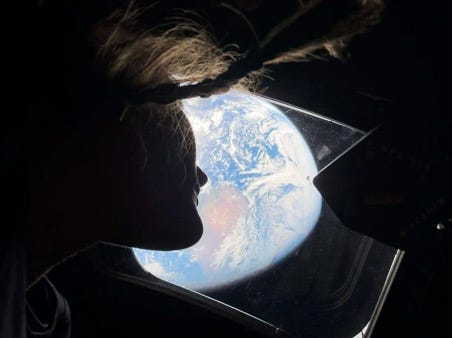
(Image: NASA)
In April, I found myself inspired by Artemis II programme and the space ship Orion. For me, there is nothing like a refreshed photograph of our most beautiful, shared home-planet captured from a rocket to offer pause for thought. Appropriately, it was also Earth Day 22nd April offering a day of celebration and reflection to carry us into May.
For me, the adventures of the intrepid astronauts, their intense focus and sense of purpose stood in stark contrast to the other headlines of the moment replete with tales of hasty, apparently poorly thought through brutal conflict and destruction down here on Earth.
In the aftermath of their return, as he stood before the welcoming crowd at the news conference, the almost tearful team-leader said he was lost for words. Fortunately he found them and when he did, he talked of being changed forever by the journey; connected and bonded to the team in indescribable ways; profoundly affected by being 200,000 miles from home.
There are many questions relevant to our human potentiality that this recent marvel of space travel raises for me as a coach and a human:
Perspective
This is perhaps the most obvious one.
● What insights do we each gain when we view Earth from this new perspective? It is both from a distance and through the eyes of the astronaut who took it.
Cost benefit
For me the adventure - however marvellous - highlights a dilemma. The rocket that brought us this beautiful view and no doubt additional scientific understanding generated enormous amounts of environmental pollution to do so.
Let’s hope we never become as blasé about space travel as we have about earth travel. Every day, according to US FAA’s Air Traffic Organization (ATO) website, more than 44,000 flights and more than 3 million airline passengers across more than 29 million square miles of airspace are served. Currently the emissions from air travel outweigh that of one occasional rocket.
Earth Day serves as a reminder of our collective human responsibility towards our planet and is a day to celebrate the progress made in environmental conservation and recognises the ongoing challenges we all face.
● How should we make our choices in the face of these cost-benefit dilemmas?
The cost of the Artemis programme in 2025 is estimated at c.$100bn. The programme generates around 350,000 jobs, scientific data and returns on that investment. This is roughly the same as the global aid budgets before they were severely cut last year. It is estimated these now lost funds saved 3.3million lives each year and also generated hundreds of thousands of jobs and opportunities worldwide.
● How do we steer our decisions individually and collectively to make good use of resources we have?
Our Inner Artemis
Two and half thousand years ago, Artemis was revered by the Greeks as the goddess of hunting, the wilderness, wild animals, transitions, nature, vegetation, childbirth, care of children, and chastity. A wide remit! Like all the Gods, she was believed to live on Mount Olympus, the highest place in that part of the world. Like her 2026 namesake she must have had a great view of the, then much less cluttered, landscape enabling her to view her humans and wonder at their behaviour – and maybe those of the other Gods too!
In our recent group coaching series we have been thinking about being human. We have explored our resourcefulness; how we look after, govern, inspire and orient our human. We have thought together about what we might be missing and what matters. Space travel and Earth Day put me in mind of the universal and deeply human attributes of wonder and curiosity.
As you read this I am freshly returned from Orkney. A place far north and with evidence of inhabitation from 8500 years ago; predating Artemis. The perspective of ancientness and distance from home has offered an opportunity to refresh my view of the world and my role in it.
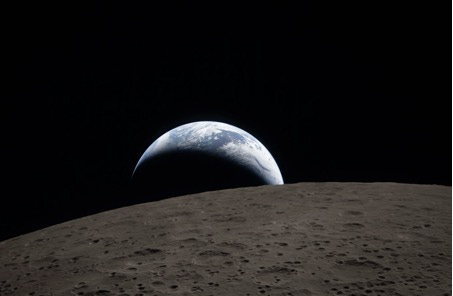
EARTHSET Earthset captured through the Orion spacecraft window at 6:41 p.m. EDT, April 6, 2026, during the Artemis Il crew’s flyby of the Moon. A muted blue Earth with bright white clouds sets behind the cratered lunar surface. Image: NASA
This months’ ponderings come from Harriet Dodd - Executive and Team Coach.
Share, like, dislike, get involved! And contact us HERE to find us for your coaching needs